OTA commission rates are not falling. Booking.com and Expedia continue to increase their share of hotel distribution, and independent properties without a deliberate direct booking strategy are paying more in commission every year than they were five years ago.
The hotels that consistently outperform on direct bookings are not necessarily larger or better-funded than their competitors. They are more strategic. They have built systems — across their website, their guest communications, and their marketing — that tip the balance back in their favour.
Here are ten approaches that actually work.
This sounds obvious, but the vast majority of independent hotel websites bury the booking call-to-action. A “Book Now” button that requires scrolling to find — or that disappears on mobile — is costing you reservations every day.
Your booking button should be in a fixed position in your site header, visible on every page, on every device, without scrolling. The colour should contrast clearly with the rest of the header. The text should say “Book Direct” or “Book Now” — not “Reservations” or “Check Availability.”
A/B testing across hospitality websites consistently shows that above-the-fold, high-contrast CTAs outperform subtle or buried ones. This is a five-minute fix with a measurable return.
Many independent hotels offer a direct booking perk but fail to communicate it clearly. If a potential guest on your website does not see an obvious reason to book with you rather than Booking.com in the first ten seconds, they may default to the platform they already trust.
Effective direct booking advantages include:
Display this advantage prominently on your homepage, your rooms page, and your booking widget — not just in your footer terms.
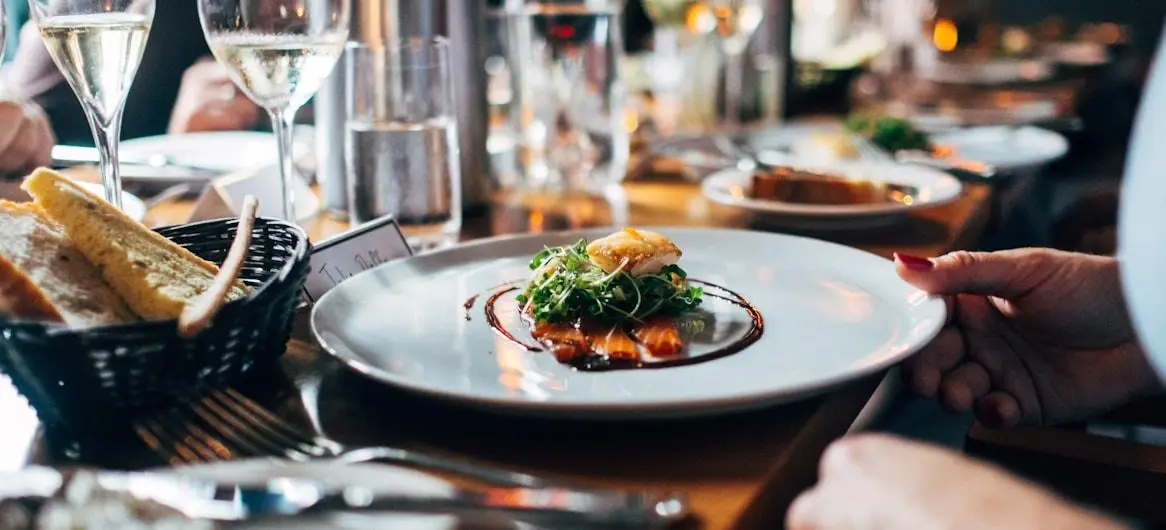
When a guest compares your website to your Booking.com listing, the one with more compelling imagery usually wins the booking. OTA listings often have extensive user-generated photography. Your own website should have better photography — not more photos, but more intentional ones.
Commission a photographer who understands hospitality. The images that convert are not just clean room shots — they are the kind of photographs that make a guest feel the experience before they have had it. The morning light in your dining room. A close-up of a detail no chain hotel would have. Your best room at a time of day it looks extraordinary.
Professional photography is the single highest-return investment most independent hotels can make in their direct booking performance.
An email to a past guest who loved their stay converts at a dramatically higher rate than any paid advertisement. Your email list is the only marketing channel you own outright — no algorithm, no commission, no platform dependency.
Build your list at every touchpoint: your booking confirmation, your pre-arrival email, your WiFi sign-up, your post-stay feedback request. Ask departing guests to opt in. Offer an incentive for newsletter subscribers — early access to seasonal rates, a first-night discount for new subscribers.
Then use it. A monthly email with a seasonal offer, a new menu, an upcoming local event, or a personal note from the owner costs almost nothing to send and can fill rooms that would otherwise have been offered to OTAs at a discount.
If someone searches your hotel’s name on Google and you do not appear first, an OTA almost certainly will — and you will pay commission on a guest who already intended to book with you.
A branded search campaign — Google Ads targeting your hotel name and common variations — is typically low-cost because competition for your specific name is limited. The return is immediate: you pay a small cost per click instead of a 15–25% commission on every booking.
This is one of the fastest ways to recover direct bookings you are currently losing to OTAs every week.
Your Google Business Profile is often the first thing a potential guest sees after a search or a recommendation. A complete, well-managed profile with recent photos, accurate information, and thoughtful review responses drives direct bookings in two ways: it builds trust before the guest reaches your website, and it links directly to your booking page rather than an OTA.
Update your photos quarterly. Keep your opening hours and contact details accurate. Respond to every review within 48 hours. Use Google Posts to highlight seasonal offers and upcoming events.
Hotels with strong, active Google profiles consistently appear higher in local search results and attract more direct traffic.
A well-crafted pre-arrival email does two things: it builds excitement for the stay and it creates a direct communication channel with the guest before they arrive. For OTA bookings, you may have limited contact information — but for direct bookings, you own this relationship from the moment of confirmation.
Send a pre-stay email two to three days before arrival. Include something personal: a note from the owner or manager, a preview of a seasonal menu, a suggestion for a local experience, a question about dietary requirements or occasion. This email transforms a transaction into the beginning of a relationship — and guests who feel known before they arrive tend to review better and return more often.
Repeat guests are the highest-value segment of any hotel’s customer base. They are easier to sell to, spend more per stay, refer more often, and review more reliably. Yet most independent hotels treat their returning guests exactly the same as first-time visitors.
A simple returning guest recognition programme does not require complex technology. A note in the reservation that this is the guest’s third visit. A small personal touch on arrival — their preferred room, a remembered preference, a welcome note that acknowledges the relationship. An email before key dates (birthdays, anniversaries) with a personalised offer.
Guests who feel genuinely remembered become advocates. Their next stay almost certainly comes through a direct booking.
A potential guest who visited your website and did not complete a reservation is a warm lead. They found you, considered you, and left — perhaps to compare, perhaps to think about it, perhaps because they were interrupted. A retargeting campaign brings them back.
Meta retargeting (Facebook and Instagram ads shown to people who visited your site) and Google Display retargeting are both effective and inexpensive for this audience. The cost per recovered booking is a fraction of the cost of acquiring new visitors — and significantly lower than an OTA commission.
Even a modest retargeting budget — €200 to €400 per month — can materially improve direct booking conversion rates for an independent hotel.
Reviews drive direct bookings in two ways. First, a high volume of recent, positive reviews builds trust and convinces undecided guests to choose you. Second, Google rewards hotels with strong review profiles with better local ranking — which means more organic traffic to your website.
The most effective review generation method is a personal, well-timed email two days after checkout. A direct link to your Google review page. A brief, warm message from the owner or manager. No incentives — just a genuine request from someone who cares about the guest’s experience.
Respond to every review you receive — positive and negative. Future guests read your responses as carefully as the reviews themselves. A thoughtful response to a critical review often converts a sceptical reader more effectively than five glowing ones.
Each of these ten approaches reduces your dependency on OTAs by doing one of three things: making your own website and booking path more compelling, building direct relationships with guests who should be coming back to you rather than re-discovering you on a platform, or capturing guests who are already looking for you before an OTA gets the commission.
None of them requires a large budget. All of them require consistency and attention.
If you would like help implementing any of these strategies for your property, The Lobby works exclusively with independent hotels and restaurants. Get in touch to talk through where to start.
The Lobby creates tailored direct booking strategies for independent hotels — from website optimisation to paid search.