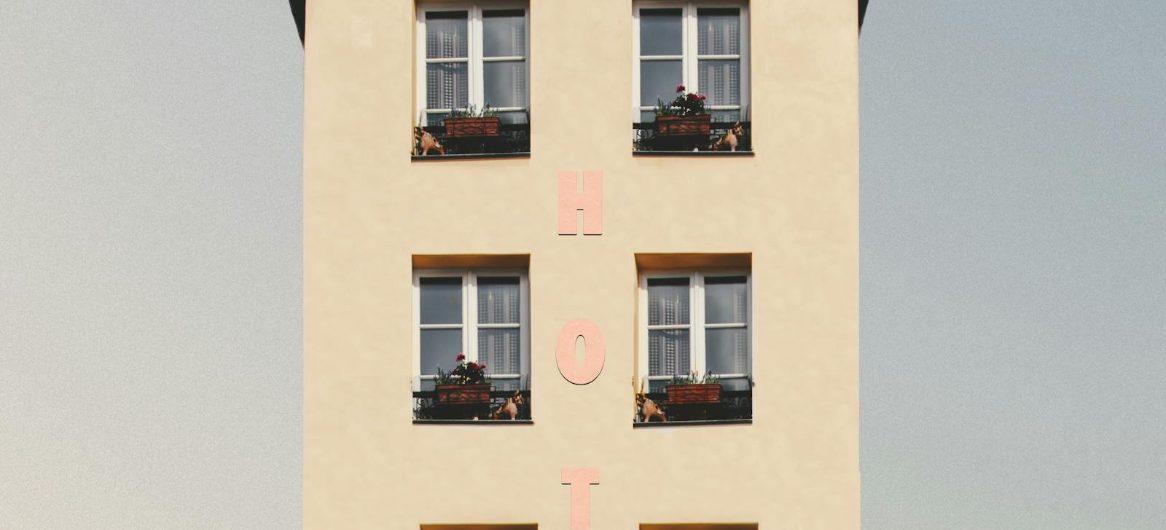
A stunning property. Exceptional service. Glowing reviews. And yet — your direct bookings aren’t where they should be.
For most independent hotels and boutique properties, the culprit isn’t the product. It’s the website.
Your hotel website is the most powerful sales tool you own. Unlike OTAs, it carries no commission. Unlike social media, you control every pixel. But only if it’s built to convert. In this guide, we break down the hotel website design best practices that separate properties generating consistent direct bookings from those quietly surrendering revenue to third-party platforms.
Most hotel owners approach their website as a branding exercise. The result is a site that looks beautiful but fails to move guests from browsing to booking.
The reality is that a hotel website visitor is often ready to buy. They’ve likely already seen your property on Booking.com or TripAdvisor. They’re on your site to validate the decision and find out whether booking direct is worth it. Every design choice — from page speed to imagery to your booking button placement — either supports that decision or undermines it.
The best-performing hotel websites treat design as a conversion tool. Beauty and performance are not opposites. But conversion always comes first.
Boutique and independent hotels have a natural advantage over chain properties: a genuine, distinctive story. Your website should tell that story — the people behind the property, the neighbourhood, the reason it exists.
Guests booking an independent hotel are often specifically choosing not to stay at a branded chain. They want personality, authenticity, and a sense of place. Give it to them.
Where brand story belongs:
A strong brand story also supports SEO. Unique, well-written content on a distinct property is naturally differentiated from the generic, templated copy that populates most hotel websites.
The booking engine is where revenue is won or lost. A beautiful website can drive a guest to the point of booking — and a clunky, slow, or visually inconsistent booking engine can lose them at the final step.
What to look for in a hotel booking engine:
If your booking engine requires more than three steps to complete a reservation, you are losing bookings. Simplify.
Guests form a judgment about your property the moment your homepage loads. If what they see doesn’t immediately communicate the feel, quality, and uniqueness of your hotel, they bounce — often back to an OTA.
What works:
What kills conversions:
Your homepage is not the place for your full story. It’s the place to make one strong impression and direct the guest to book.
In hospitality, guests are buying an experience before they’ve had it. Photography is how you sell that experience online.
Poor photography — underlit rooms, unflattering angles, outdated décor shots — will undermine even the most technically excellent website. Professional images, on the other hand, create desire and build trust simultaneously.
Best practices for hotel photography:
The rule of thumb: if your photography could belong to any hotel, it belongs to none.
A one-second delay in page load time can reduce conversions by up to 7%. For hotels competing against OTAs with optimised, fast-loading platforms, a slow website hands revenue straight to the competition.
Page speed is also a direct ranking factor for Google. A slow site doesn’t just convert fewer visitors — it attracts fewer visitors in the first place.
Key technical performance factors:
Run your site through Google PageSpeed Insights. If you’re scoring below 70 on mobile, you have a problem worth fixing urgently.
More than 60% of hotel website traffic now comes from mobile devices. Yet many hotel websites are still designed desktop-first, with mobile treated as an afterthought.
A mobile-first approach means designing the entire guest experience around the smallest screen first, then scaling up. This fundamentally changes how you think about navigation, button sizes, image loading, and the booking flow.
Mobile design essentials:
Test your site on an actual mobile device, not just a browser simulation. The difference is often significant.
Independent hotels compete against OTAs that carry enormous brand recognition. Your website needs to work harder to earn the trust that a platform like Booking.com gets by default.
Trust signals to include:
Trust is built through accumulated detail. No single element makes the difference, but the absence of trust signals is immediately felt.
Guests don’t just choose a room. They choose a destination, and then a property within it. A dedicated local area section on your website serves two purposes: it helps guests visualise their stay, and it generates SEO value around high-intent local search terms.
What effective local area content includes:
This content also positions your hotel as a knowledgeable local host rather than just an accommodation provider — a meaningful differentiator for independent properties.
A hotel website is never finished. The best-performing properties treat their website as a live asset, reviewing performance data regularly and testing changes to improve conversion.
Key metrics to monitor:
Set up Google Analytics 4 and connect your booking engine data. If you don’t know what your direct booking conversion rate is today, finding out is the first step.
The gap between a hotel website that looks good and one that actively generates direct revenue is significant. The best sites aren’t necessarily the most elaborate or expensive — they’re the ones built around how guests actually behave and what moves them to book.
At The Lobby, we specialise in hotel website design and conversion strategy for independent and boutique properties. We build websites that are built to rank, built to convert, and built to reduce your dependence on OTAs.
The Lobby is a hospitality digital marketing agency working with independent hotels and restaurants across Europe. We combine SEO, paid media, and website strategy to grow direct revenue.
The Lobby designs and builds high-performing hotel websites for independent properties — built for guests and optimised for search.